

The assumption that top-tier diagnostic imaging requires the prohibitive price tags of legacy brands is no longer true for the modern radiology department. Many clinicians feel the physical toll of eye strain during long shifts, while administrators struggle to maintain DICOM Part 14 compliance across fragmented monitor fleets. Jusha medical monitors have emerged as a sophisticated alternative, offering the precision required for high-stakes diagnostics without the unnecessary overhead of traditional hardware. This guide provides the definitive technical reference for selecting, calibrating, and integrating these displays into your facility.
You'll learn how to identify the ideal model for specific modalities, including the latest July 2026 mammography releases and high-resolution CT displays. We'll outline the steps for seamless integration with PACS Harmony and Dextro Reading Stations to ensure your workflow remains uninterrupted. By focusing on technical optimization, the latest 2026 DICOM updates, and new ADA accessibility standards, this reference helps you lower the total cost of ownership while modernizing your diagnostic environment. We've structured this information to move quickly from broad capabilities to the specific functional applications your team needs today.
Key Takeaways
- Identify the optimal megapixel resolution for your specific modality, including the latest 12MP "all-in-one" diagnostic displays.
- Maintain strict DICOM Part 14 compliance and Grayscale Standard Display Function (GSDF) accuracy for long-term clinical reliability.
- Learn how to select Jusha medical monitors that meet the rigorous demands of high-volume X-ray, CT, and 2026 mammography workflows.
- Integrate hardware seamlessly with PACS Harmony and aycan PACS to eliminate technical friction and improve diagnostic speed.
- Optimize your physical workspace by building a Dextro Reading Station designed to reduce fatigue and maximize radiologist productivity.
Introduction to Jusha Medical Display Technology
The role of high-resolution displays has shifted from simple output devices to active diagnostic tools. Modern medical imaging technology demands hardware that can process massive datasets with zero latency while maintaining absolute visual fidelity. Jusha medical monitors provide this critical backbone, ensuring that every pixel represents an accurate clinical truth. Since its founding in 1996, Jusha has dedicated 30% of its workforce to R&D, resulting in over 1,000 patents that specifically address image consistency and reliability. It's this commitment to engineering that allows these displays to meet the rigorous demands of the latest 2026 DICOM updates.
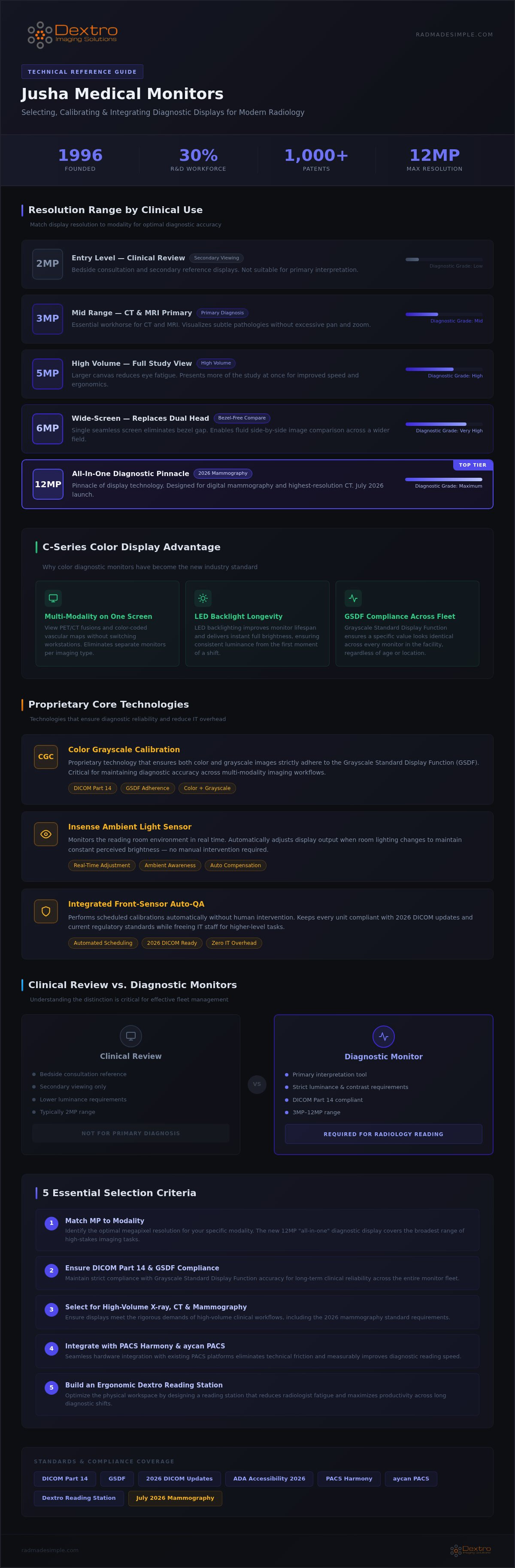
Distinguishing between clinical review displays and diagnostic monitors is vital for effective fleet management. While clinical review screens are suitable for bedside reference, diagnostic monitors must meet strict luminance and contrast requirements to serve as primary interpretation tools. Jusha has become a preferred OEM partner for global healthcare facilities because their hardware maintains these standards over exceptionally long lifecycles. Their July 2026 launch of a new generation of mammography monitors further solidifies their position as an innovator that anticipates the needs of specialized diagnostic workflows.
The Evolution of Medical-Grade Displays
Radiology has moved beyond the era of grayscale-only screens. High-luminance color diagnostic monitors now allow radiologists to view fused PET/CT images or color-coded vascular maps without switching workstations. The transition to LED backlighting has improved monitor longevity and ensured that screens reach full brightness instantly. Consistent luminance is the foundation of diagnostic confidence because it ensures that a specific grayscale value looks identical across every monitor in the facility, regardless of its age or location.
Core Technologies: CGC and Insense
Precise calibration defines the performance of Jusha medical monitors. Their proprietary Color Grayscale Calibration (CGC) technology ensures that color and grayscale images both adhere strictly to the Grayscale Standard Display Function. This precision is paired with the Insense ambient light sensor, which monitors the reading room environment in real time. If room lighting changes, Insense automatically adjusts the display output to maintain constant perceived brightness. Automated quality assurance is further streamlined by integrated front-sensor technology. These sensors perform scheduled calibrations without human intervention, ensuring every unit remains compliant with current regulatory standards while freeing IT staff for higher-level tasks.
Decoding the Jusha Product Line: Resolution and Modality
Selecting the right resolution is the first step in optimizing a radiology workflow. Jusha medical monitors are categorized primarily by their megapixel (MP) count, which dictates their suitability for specific clinical tasks. While traditional grayscale units still exist, the C-series (Color) has become the industry standard. These color displays allow for multi-modality imaging on a single screen, combining high-contrast grayscale performance with the ability to render color overlays for nuclear medicine or advanced 3D reconstruction. This versatility eliminates the need for separate monitors for different imaging types, streamlining the reading environment.
The 2MP to 5MP Range: Standard Diagnostic Work
The 2MP displays serve as the entry point for most facilities, primarily functioning as clinical review displays for bedside consultation or secondary viewing. For primary diagnosis in CT and MRI, the 3MP and 5MP models remain the essential workhorses. These resolutions provide the necessary pixel density to visualize subtle pathologies without requiring excessive pan and zoom. Balancing pixel pitch with screen size is crucial for ergonomics. A 5MP display offers a larger canvas that reduces eye fatigue during high-volume shifts by presenting more of the study at once. This range is ideal for high-volume environments where speed and reliable image consistency are the top priorities.
High-Resolution Pioneers: 6MP to 12MP Displays
The shift toward wide-screen 6MP displays has largely replaced the cumbersome dual-head setups of the past. A single seamless screen eliminates the bezel gap, allowing radiologists to compare images more fluidly across a wider field of view. At the top of the range, 12MP displays represent the pinnacle of current display technology. These units are specifically designed for digital mammography and breast tomosynthesis, where every micron of detail matters. The 12MP "all-in-one" display serves as a central hub for multi-modality reading. It allows a radiologist to view a high-resolution mammogram alongside a patient's prior CT or ultrasound images without needing secondary screens.
Models like the Jusha C1210G have received FDA clearance for diagnostic use, confirming their ability to meet the most stringent requirements for breast imaging. Managing the massive data throughput of these high-resolution displays requires robust hardware integration. If you're looking to upgrade your facility, choosing a radiology reading workstation that supports these high-performance monitors is the best way to ensure long-term stability and compliance. These integrated systems ensure that your Jusha medical monitors perform at their peak while maintaining the strict standards required for modern diagnostic medicine.
Clinical Applications: Choosing the Right Monitor for Your Specialty
Not all Jusha medical monitors are built for the same task. Matching the megapixel rating to the diagnostic modality is essential for maintaining clinical accuracy while managing equipment budgets effectively. For high-volume X-ray and chest imaging, 3MP displays remain the industry standard. They provide the necessary resolution to identify subtle fractures or pulmonary nodules without the unnecessary expense of ultra-high-resolution units. These workhorses offer the reliability needed for fast-paced environments where throughput is a priority.
Cross-sectional imaging, such as CT and MRI, requires a different approach. These modalities benefit from 3MP to 5MP color monitors that can handle complex grayscale values while rendering the color overlays used in fused PET/CT studies. It's a common mistake to assume surgical displays can fill this role. While surgical screens are durable and offer low latency for the operating room, they lack the fine grayscale calibration and high luminance required for primary interpretation. Using a surgical display for diagnosis is a significant risk that can lead to missed findings and non-compliance with institutional standards.
Digital Mammography and Tomosynthesis
Precision is non-negotiable in breast imaging. For these applications, 5MP grayscale or 12MP color displays are the only acceptable options. Jusha’s July 2026 mammography releases include specialized features designed to enhance the visibility of microcalcifications, which is a critical requirement for early breast cancer detection. These units are engineered to meet strict ACR (American College of Radiology) guidelines, ensuring that the luminance and contrast levels remain stable over years of heavy use. This high level of detail allows radiologists to interpret breast tomosynthesis slices with total confidence.
Teleradiology and Remote Reading Setup
The rise of distributed radiology has increased the demand for professional-grade hardware in home offices. Integrating Jusha monitors into a portable radiology workstation allows for a seamless transition between the hospital and a remote environment. These compact diagnostic displays offer significant space-saving benefits without sacrificing the technical specs of a full-sized reading station. To address connectivity challenges, these monitors are designed for plug-and-play compatibility with modern laptops and docks. This ensures that radiologists can maintain the same diagnostic standards at home that they expect in the clinical suite.
Ensuring Diagnostic Accuracy: Calibration and DICOM Compliance
Maintaining DICOM Part 14 compliance is the most critical technical requirement for any diagnostic display. This standard ensures that grayscale images appear consistent across different hardware, which is vital for detecting subtle pathologies like faint lung nodules or hair-line fractures. Jusha medical monitors are engineered to meet these requirements out of the box, but diagnostic accuracy depends on ongoing maintenance. Without regular calibration, even the most advanced screens can drift, leading to visual inconsistencies that compromise clinical confidence.
The Grayscale Standard Display Function (GSDF) provides the mathematical foundation for this consistency. It maps digital input values to specific luminance levels based on the human eye's perception of contrast. Jusha monitors use integrated front-sensors to monitor this output continuously. These sensors act as a built-in quality assurance team, automatically adjusting the display to stay within the strict tolerances defined by the 2026 DICOM updates. This automation removes the burden of manual checks from IT staff and ensures every reading station remains compliant at all times.
Calibration Software Integration
Managing a fleet of monitors requires a centralized approach. Jusha’s proprietary software allows administrators to perform remote fleet management, checking the compliance status of every screen in the hospital from a single workstation. You can schedule automated "sleep-time" QA tests that run during off-hours, ensuring the system is ready for the next shift without interrupting active clinical work. If you need to perform a baseline DICOM calibration manually, follow these steps:
- Power on the monitor and allow it to warm up for at least 30 minutes to stabilize the backlight.
- Launch the Jusha calibration software and select the "Standard DICOM Calibration" profile.
- Ensure the integrated front-sensor is active or place an external photometer in the center of the screen.
- Run the automated luminance sequence to measure the display's current GSDF curve.
- Review the compliance report and save the results to your institutional QA logs for regulatory auditing.
Environmental Factors and Display Performance
The physical environment of the reading room directly impacts perceived image quality. Ambient lighting can wash out blacks and reduce the effective contrast ratio of a display. Jusha’s Insense technology addresses this by measuring room light and adjusting the monitor's luminance to maintain a consistent viewing experience. This is especially important for maintaining consistency across a multi-monitor workstation, where different screens might be positioned at different angles relative to overhead lights.
Backlight aging is another factor that can degrade performance over time. As LEDs age, their maximum brightness naturally decreases. Jusha displays include aging compensation circuits that increase the power to the LEDs as they wear, keeping the luminance stable for the entire life of the unit. To ensure your facility maintains these high standards across every reading station, contact our technical team for a fleet compliance audit and discover how we can streamline your QA workflow.
Optimizing Your Workflow with Jusha and Dextro Imaging
A high-performance monitor is only one component of an efficient diagnostic environment. To truly modernize a department, Jusha medical monitors must be fully integrated into the facility's imaging ecosystem. This involves more than just a physical connection; it requires seamless software handshakes with platforms like PACS Harmony and aycan PACS. These integrations ensure that images load with zero latency and that metadata is preserved across the entire diagnostic chain. When hardware and software work in unison, the technical complexity of the reading room disappears, allowing radiologists to focus entirely on patient care.
Efficiency is further enhanced by leveraging RadVoice for reporting directly at the station. By using voice recognition, clinicians can maintain their visual focus on the high-resolution Jusha display while dictating findings. This eliminates the constant shift in gaze between screens and keyboards, which is a primary cause of cognitive load and fatigue. Dextro Imaging Solutions focuses on this holistic approach to ensure that every second spent at the reading station is optimized for maximum productivity and diagnostic accuracy.
Integrated Reading Room Solutions
Designing a professional radiology reading workstation requires careful consideration of ergonomics and hardware compatibility. High-megapixel Jusha setups, particularly the 6MP and 12MP models, demand specific GPU configurations to handle massive data throughput. If the graphics card is underpowered, image rendering will lag, causing frustration and delaying diagnosis. We design workspaces that prioritize optimized display geometry, ensuring that monitors are at the correct height and angle to reduce neck strain and eye fatigue during long diagnostic shifts.
The Dextro Advantage: Support and Compliance
Our team provides customized installation and PACS integration services tailored to your facility's specific technical requirements. We understand that medical technology isn't a simple purchase; it's a long-term clinical investment. Our maintenance contracts include ongoing compliance monitoring and hardware troubleshooting to ensure your fleet always meets the latest 2026 DICOM standards. This proactive support model protects your investment and guarantees uptime for your most critical diagnostic tools. If you're ready to upgrade your facility with high-performance hardware, view our current inventory of Jusha medical monitors to find the right fit for your clinical requirements.
Modernizing Your Radiology Workflow for 2026 and Beyond
Achieving clinical excellence requires a precise balance of high-resolution hardware and seamless software integration. By matching Jusha medical monitors to your specific diagnostic modalities and maintaining strict DICOM Part 14 compliance through automated sensors, your facility ensures long-term accuracy and regulatory adherence. These displays act as the vital backbone of an optimized reading environment, especially when they're paired with advanced workstations and integrated reporting tools. This technical synergy reduces radiologist fatigue and streamlines the path from image acquisition to final report.
As an authorized Jusha distributor, Dextro Imaging Solutions provides the technical expertise needed to integrate these displays into your existing PACS Harmony or aycan PACS environment. Our team offers expert DICOM calibration support and ensures your setup is voice recognition ready for immediate reporting with RadVoice. This comprehensive approach removes operational friction and allows you to focus on high-stakes diagnostic interpretation with total confidence. We're committed to protecting your investment through proactive maintenance and specialized support.
Upgrade your diagnostic capabilities with Jusha medical monitors from Dextro Imaging Solutions.
We look forward to helping you build a more efficient, reliable, and modern imaging future for your department.
Frequently Asked Questions
Are Jusha medical monitors DICOM Part 14 compliant?
Yes, Jusha medical monitors are fully DICOM Part 14 compliant out of the box. Every unit is engineered to meet the Grayscale Standard Display Function (GSDF) required for diagnostic interpretation. Integrated front-sensors continuously monitor luminance output to ensure the display stays within strict regulatory tolerances. This automated approach provides clinicians with the confidence that their hardware maintains absolute visual fidelity for high-stakes decision-making.
What is the difference between a Jusha C-series and E-series monitor?
The C-series is designed for primary diagnostic interpretation, while the E-series is built for surgical environments. C-series monitors prioritize high-resolution grayscale accuracy and precise calibration for reading X-rays, CTs, and MRIs. In contrast, E-series units focus on durability, low latency, and ease of sterilization for the operating room. Choosing the correct series ensures that the hardware's technical capabilities match the specific clinical demands of the department.
How often should I calibrate my Jusha diagnostic display?
You should perform a baseline calibration check at least once per year, though automated sensors handle daily adjustments. Jusha's proprietary software allows for scheduled quality assurance tests during off-hours to ensure constant compliance without human intervention. Many facilities prefer quarterly audits to meet internal risk management standards. Regular calibration prevents the subtle luminance drift that can occur as a monitor ages, protecting the integrity of your diagnostic workflow.
Can I use a Jusha monitor with any PACS software?
Yes, Jusha medical monitors are designed for universal compatibility with any standard PACS software. They function seamlessly with platforms like PACS Harmony and aycan PACS to provide a high-performance reading environment. Dextro Imaging Solutions specializes in the technical integration of these displays into existing hospital networks. This ensures that metadata and image quality remain consistent across the entire diagnostic chain, regardless of the software vendor you use.
What resolution is required for reading mammography studies on a Jusha monitor?
Reading mammography studies requires a minimum resolution of 5MP for grayscale or 12MP for color displays. Jusha’s latest July 2026 releases are specifically engineered to handle the massive datasets involved in breast tomosynthesis. These high-resolution screens allow for the detection of microcalcifications that might be missed on lower-MP displays. Adhering to these resolution standards is essential for maintaining compliance with American College of Radiology guidelines for breast imaging.
Does Jusha offer portable diagnostic monitors for home reading?
Yes, Jusha provides specialized portable diagnostic monitors designed specifically for teleradiology and remote reading. These compact units maintain full diagnostic resolution while fitting into the footprint of a portable radiology workstation. They offer a sophisticated solution for radiologists who need to transition between hospital and home environments without sacrificing image quality. This flexibility allows for a more agile workforce while maintaining the same high standards found in clinical suites.
How does Jusha’s Insense technology reduce eye strain?
Insense technology reduces eye strain by automatically adjusting the monitor's luminance to match the ambient lighting of the room. This prevents the harsh contrast that occurs when a bright screen is used in a dark reading environment. By maintaining a stable perceived contrast ratio, the system minimizes the visual fatigue often experienced during long diagnostic shifts. This proactive approach to ergonomics helps radiologists stay focused and productive throughout their workday.
What is the expected lifespan of a Jusha medical-grade display?
The expected lifespan of a Jusha medical-grade display is typically between 30,000 and 50,000 hours of operation. To protect this investment, the hardware includes aging compensation circuits that stabilize luminance as the LED backlight matures. This ensures that the monitor remains DICOM compliant for years, even with heavy daily use. Implementing a maintenance contract with Dextro Imaging Solutions can further extend the reliable service life of your fleet through expert support.


